Here’s the honest answer: plan for 6 to 8 months from your first meeting to your first swim.
That number surprises most people. The actual construction, from breaking ground to pouring concrete to filling the pool with water, takes about 60 working days when nothing goes wrong. Everything else is design, permits, inspections, material deliveries, weather, and waiting. The permitting process alone takes 6 to 8 weeks.
That gap between 60 days of real work and 6 to 8 months of calendar time is the number one thing that catches homeowners off guard. So let’s walk through where the time actually goes.
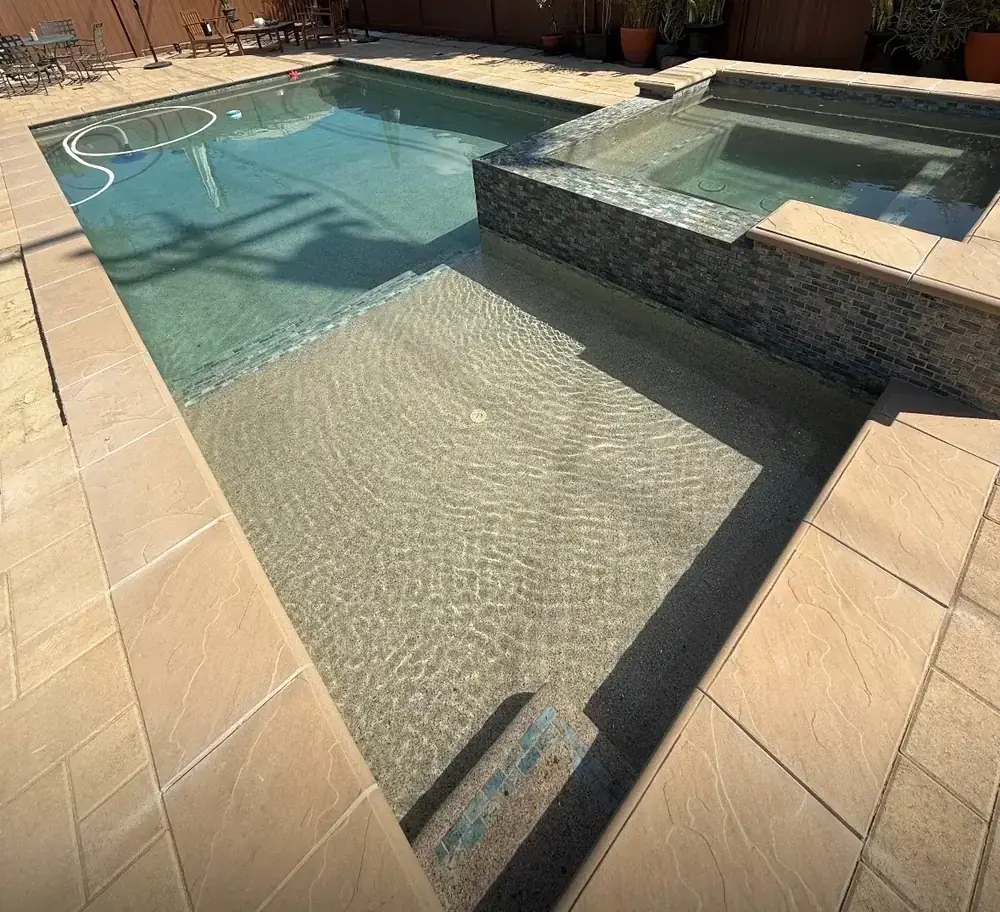
The timeline at a glance
The ranges below are for a standard project: a flat lot, a straightforward design, and no special materials or extravagant features. A hillside lot changes everything. Even a minor grade difference can trigger additional engineering, a soils report, and extra city oversight. The same goes for custom features. Fountains, waterfalls, infinity edges, and materials that are fabricated to order or shipped from out of state all add time.
The reference point here is a 15′ x 30′ pool and spa on flat ground, about as typical as it gets in Southern California.
| Stage | Typical time |
|---|---|
| Design, bid, and contract | 2 to 3 weeks |
| Engineering and permits | 6 to 8 weeks |
| DigAlert and excavation | 2 days |
| Steel, plumbing, and electrical | About 2 weeks |
| Shotcrete and curing | 1 day, plus about 1 week to cure |
| Tile and coping | 3 to 4 days |
| Decking and hardscape | Varies |
| Equipment set | 2 to 3 days |
| Safety enclosure and inspection | 3 to 4 days |
| Plaster, start-up, and final inspection | 1 to 2 weeks |
These ranges reflect Bid Clarity’s experience with Southern California residential pool projects. Your contractor should give you their own estimate for each stage.
Stage by stage
1. Design, bid, and contract: about 2 to 3 weeks
The first meeting should happen at your property. A good contractor sends someone who will actually listen, not just pitch. They should measure the space and tell you what will and won’t work given your layout, access, setbacks, and budget. Any potential complications should come up now, not three months in.
Many contractors offer a 3-D design. Some charge for it (we’ve seen it priced around $2,500), and often the cost is credited back if you move forward with the build. It’s worth doing. You get an actual visual of the finished project instead of just imagining it. And moving a spa or changing a design feature on a screen is a lot cheaper than moving it in the ground.
Once the design is settled, you sign the contract and pay the deposit. Under California law, that deposit can’t exceed $1,000 or 10% of the contract price, whichever is less. 1
One thing that catches people off guard: California requires at least two of seven specific drowning-prevention features when a permit is issued for a new pool at a single-family home. 2 If your existing gates swing the wrong way or aren’t tall enough, or you don’t have alarms on the house doors that lead to the pool area, getting into compliance is an added cost. A good salesperson brings this up on the first visit so it’s in your budget from the beginning, not a surprise later.
Also worth knowing: in our experience, automatic pool covers work reliably only on rectangular or square pools.
2. Engineering and permits: 6 to 8 weeks, sometimes longer
This is almost always the longest wait, and there’s very little to see while it’s happening.
Most established contractors handle engineering and permitting in-house. You should give final approval of the plans before they go to the city. A standard arrangement is a flat fee for the contractor’s permit work, with the actual city fees passed through to you at cost, with receipts. Those fees vary significantly from city to city.
For a standard project, budget 6 to 8 weeks outside of the holiday season. Hillside lots and projects that need additional engineering typically add another 4 weeks on top of that.
3. DigAlert and excavation: about 2 days
Before anyone digs, the contractor contacts DigAlert (811) so utility companies can come out and mark underground lines. California requires the request to go in at least two working days before excavation begins. 3
If a gas or power line runs through the pool’s footprint, moving it is typically the homeowner’s responsibility and expense. Make sure your contract is clear about who handles it if that comes up.
Demolition and excavation themselves take about two days and should be included in the price of the build.
4. Steel, plumbing, and electrical: about 2 weeks
Rebar goes in first, usually in just a day or two. Then rough plumbing and electrical wiring, which can take about 10 days. Then the city’s rough plumbing inspection. All of this, including the inspections, should be included in your contract.
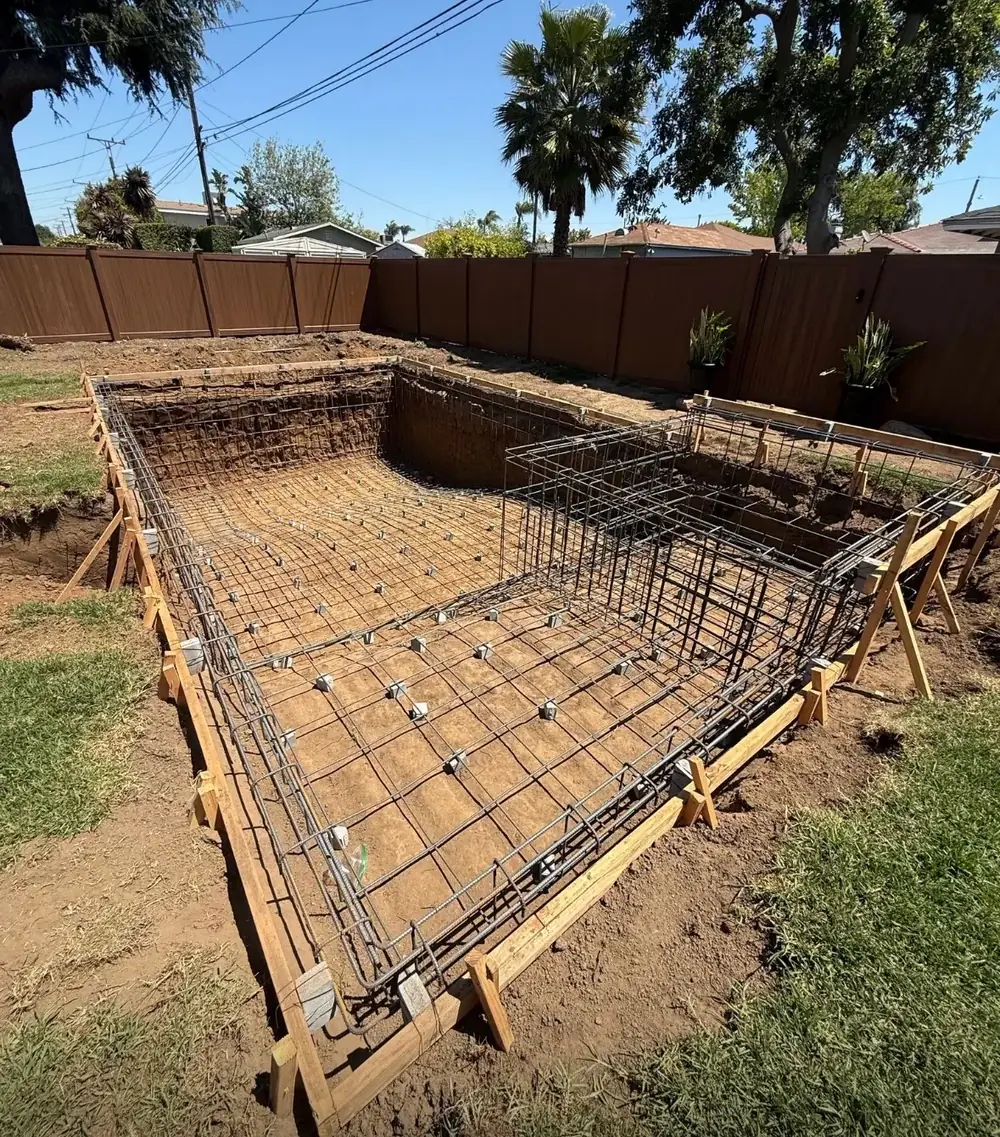
In our experience, this is the turning point. The beginning of a pool project moves slowly. Once plumbing is in the ground and inspected, everything that follows moves faster.
5. Shotcrete and curing: 1 day, then about a week
The pool shell is sprayed in a single day. Shotcrete is the stronger method, and most quality builders use it today. The shell then needs about a week to cure.
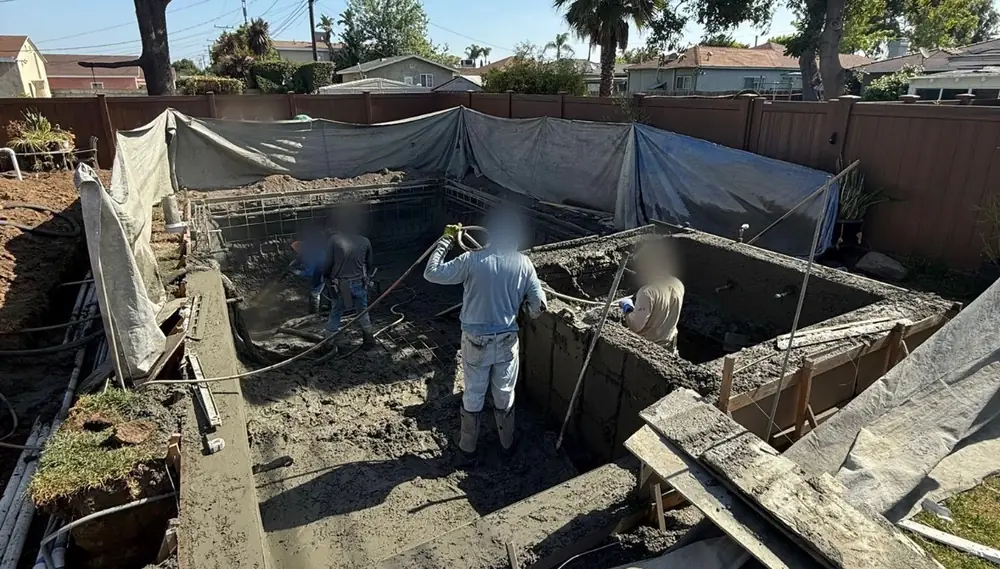
You may be asked to help with this. Many contractors ask homeowners to water the new shell twice a day during the cure to help it set properly. Ask your contractor whether they want you to do this, and what the schedule looks like.
6. Tile and coping: 3 to 4 days
Standard materials (typically porcelain tile and precast coping) and the labor to install them are usually included in the contract. Upgrades cost more, and some take longer. Handmade kiln-fired tile, for example, is laid piece by piece and has to be soaked, treated, and sealed by hand. If you’re considering something like that, build extra time into your expectations.
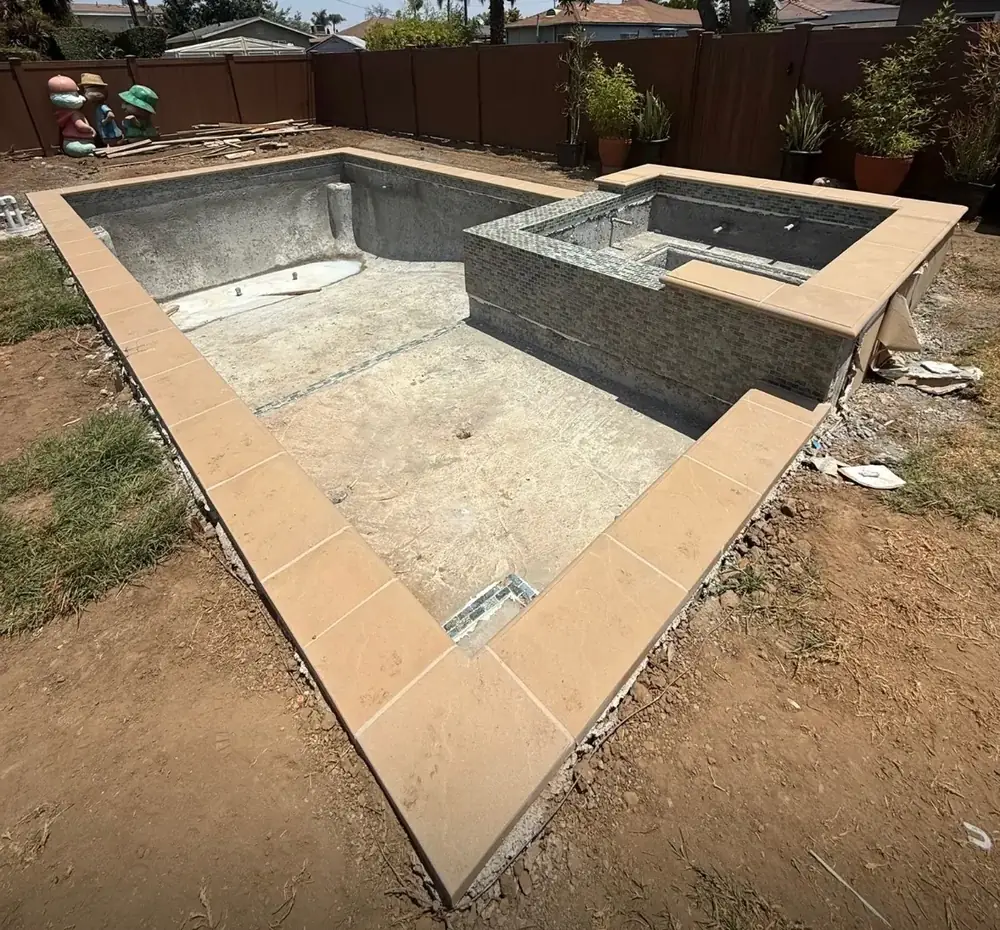
This is also where homeowner decisions have the most impact on the schedule. More on that below.
7. Decking and surrounding hardscape: varies
Time and cost depend on square footage, material, and site conditions. Bids often include a material allowance, a dollar-per-square-foot figure for a specific type of decking or paving. Check what that allowance actually buys before you get attached to a finish. Composite decking, natural stone, and poured concrete all sit at different price points, and stain or sealer is often a separate cost.
8. Equipment set: 2 to 3 days
Equipment is one of the trickiest sections to read in any pool bid. Sometimes it’s included in the contract price. Sometimes it’s a separate cost the client pays directly. It varies by contractor, and the difference can be significant. In our experience, equipment can represent around 20% of the total project cost.
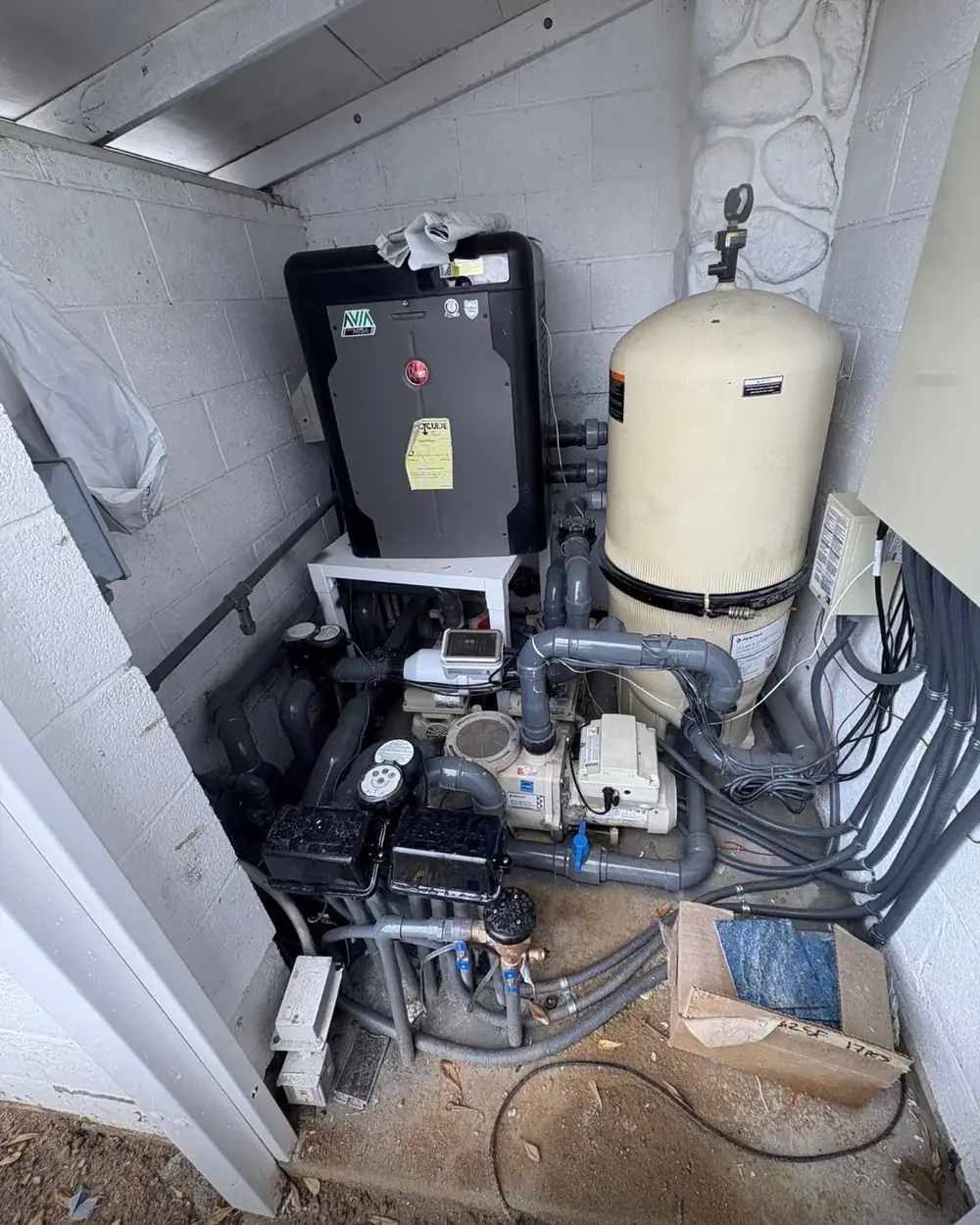
Read this section carefully in every bid you receive. Some contractors have homeowners buy equipment directly from a supplier through a payment link, which makes it one of the few parts of a pool project that can go on a credit card.
After the equipment is set, the city does a bonding inspection, an electrical safety check that has to pass before the project can move forward.
9. Safety enclosure and inspection: 3 to 4 days, then inspection
Gates, fencing, door alarms, or an automatic cover are installed or brought into compliance, and the city inspects the enclosure. 2 If this was addressed at the first sales meeting, nothing here should be a surprise. If it wasn’t, this is where it shows up, and a surprise bill to bring fencing or other safety features up to code can be quite disruptive to a nearly finished project.
10. Plaster, start-up, and final inspection: about 1 to 2 weeks
White plaster is typically the standard finish. Pebble and quartz finishes cost more unless your contract specifically includes them. Plaster goes on in a day; pebble finishes take two. The pool is filled right after, and start-up (balancing the water chemistry and getting all the equipment running correctly) takes about a week. Once start-up is complete, the final inspection comes next.
Inspection costs are generally covered by the permit and fall on the contractor. If an inspection fails and a re-inspection is required, there may be a fee. Know in advance who’s responsible for that cost.
CSLB recommends that your final payment come after the plaster is complete and any required equipment, decking, or fencing is installed. 4
Why projects get delayed
In our experience, here are the most common causes, in order:
- The city and the weather. Permit reviews, inspection scheduling, and rain have the biggest impact, and none of them are in anyone’s control.
- Homeowner decisions. Taking too long to choose tile, coping, or finishes, or picking upgraded materials with long lead times, stalls construction. Custom-fabricated or imported materials can add weeks.
- Late payments. California law ties contract payments to completed work. 1 When a scheduled payment is late, work can stop.
Other things happen too: material shipping delays, crew illnesses, equipment breakdowns. They’re part of any construction project. What matters is how you hear about them and how fast the contractor responds.
How to keep your project moving
- Make your finish decisions early. Ask for tile, coping, and finish brochures at the first meeting, and request physical samples at least three weeks before those materials are scheduled to go in. If your contractor hasn’t provided them, ask.
- Know your payment schedule before you sign. Payments should be tied to completed stages, not arbitrary dates. Have funds ready when each phase wraps up.
- Minimize design changes after permits are submitted. Any revision to the approved plans can mean a new submittal and more waiting at the city.
What good communication looks like
You should never be left wondering what’s happening with your project. Expect:
- Confirmation when plans are submitted, and regular updates on permit status
- Clear notice of the construction start date and the daily schedule
- Updates two to three times a week once construction begins
- Immediate notice of any delay. If something is going to push your project back more than a few hours, you should hear about it from the project manager the same day.
Your main point of contact should be a project manager. After that, the foreman, and the owner if needed.
What to look at yourself
You don’t need to inspect the rebar. That’s what city inspections are for. Your attention matters most once finish materials start going in. Walk the site and look for:
- Chipped or cracked tile
- Broken or uneven coping or pavers
- Colors that don’t match what you selected
- Staining or discoloration
- Anything that looks different from the sample you approved
Flag anything while the crew is still on site. It’s almost always faster and cheaper to fix on the spot than to come back later.
The one thing to know before day one
Building a pool takes patience. In our experience, it’s the timeline, more than the noise or the mess, that wears on people most.
One thing that helps: your salesperson often doesn’t get paid until the job is complete, so they have a real stake in getting your pool finished too. But not every company runs that way. A well-run company keeps things moving and tells you clearly when something gets in the way. If you’re getting more excuses than updates, or deadlines keep slipping without explanation, pay attention to that.
The best time to sort all of this out is before you sign. A clear bid spells out what’s included, what’s not, and who’s responsible for permits, equipment, safety features, and anything unexpected underground. Our Southern California pool bid checklist walks through what to look for, and our backyard renovation cost guide covers what each piece typically costs.
Frequently asked questions
How long does it take to build a pool in Southern California?
In our experience, 6 to 8 months from the first design meeting to the final inspection. Construction itself takes about 60 working days without delays. Design, permits, inspections, material deliveries, and weather make up the rest.
How long do pool permits take in Southern California?
Usually 6 to 8 weeks for a standard project, outside the holiday season. Hillside lots and projects requiring additional engineering typically add another 4 weeks.
What are the stages of building a pool?
Design and contract, engineering and permits, DigAlert and excavation, steel, plumbing, and electrical, shotcrete, tile and coping, decking and hardscape, equipment, safety enclosure, plaster, start-up, and final inspection, with city inspections at several points along the way.
How long does shotcrete take to cure?
About a week. Homeowners are often asked to water the shell twice a day during that time. Ask your contractor whether they want you to do this.
What causes pool construction delays?
Most often the city’s permitting and inspection process and the weather, then homeowner decisions on finishes, then late payments. Supply delays, crew issues, and equipment problems also happen.
How often should my contractor update me?
Two to three times a week during construction, with same-day notice of any delay that pushes the project back more than a few hours. Your project manager is your primary contact.