The short answer: in our experience, an experienced, full-service contractor with a strong track record will typically charge $86,000 to $95,000 for a standard 15′ x 30′ pool and spa with basic finishes. Upgraded finishes and features can push that past $125,000. And the floor is lower than you might think, but not by much: we’d be surprised to see a new pool built in Southern California today for less than $78,000, and that price usually gets you the most bare-bones build possible, sometimes from a less established company.
Published cost guides tend to show lower numbers. Angi puts the typical in-ground pool in Los Angeles at $58,880 to $105,400, with an average of $82,140, 1 and its national figures are lower still. 2 Those numbers aren’t wrong, but some of the low end reflects what a pool costs to build, not what a licensed contractor sells it for.
Here’s what actually drives the price.
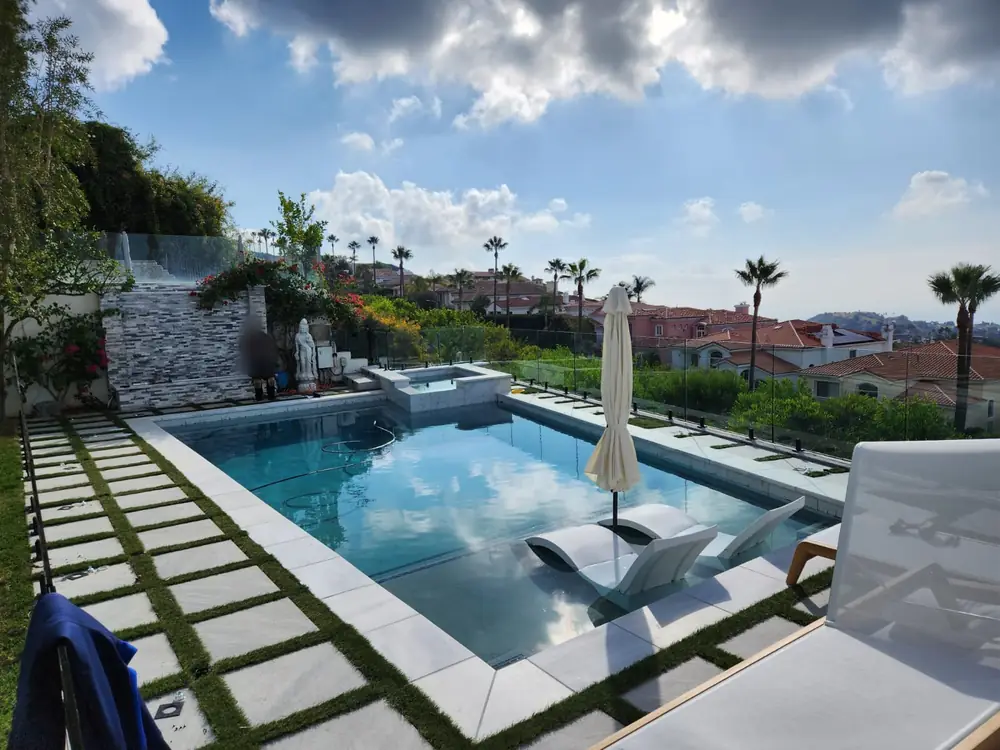
Smaller pools aren’t much cheaper
This is one of the biggest misconceptions we see. Homeowners assume a pool half the size will cost about half as much. It won’t.
A small pool still takes every trade a big one does: excavation, framing, rebar, plumbing, electrical, shotcrete, coping, tile, and plaster. The crews still show up, the permits still get pulled, and the inspections still happen. The only real savings is in material.
For example, if a standard 15′ x 30′ pool costs $100,000, a 10′ x 12′ plunge pool might save you roughly $10,000. Not much more than that. If you’re downsizing your plans to save 25% or more, it probably won’t get you there.
Does it cost more in LA than San Diego?
Not much, at least not because of the county. Permit fees vary from city to city, but that difference usually moves the total by only a few thousand dollars.
What matters far more is your specific site: access, slope, soil, and logistics. A contractor shouldn’t charge more just because a home is in Palos Verdes instead of Chula Vista.
Distance can matter, though. Tradespeople price their time, and a long drive costs them hours and gas. A tile installer who lives in Montebello will often quote more for a job in Malibu than one across town.
Permits and plans: $4,500 to $6,000
Permit costs vary city by city, each with its own taxes and fees. In our experience, the contractor’s planning work typically carries a $3,000 to $4,000 fee plus tax, and all in, most homeowners should expect to pay $4,500 to $6,000 for plans and permits on a new pool.
That’s well above the $450 to $1,800 national permit range you’ll see in published guides. 2 The difference is the engineering and plan work, which national figures often don’t include. Check whether your bid includes permits or lists them separately.
Site conditions: where costs really climb
Hillsides, poor access, hand digging, bad soil, and crane rentals can each add a few thousand dollars on their own. Combined, they can add tens of thousands.
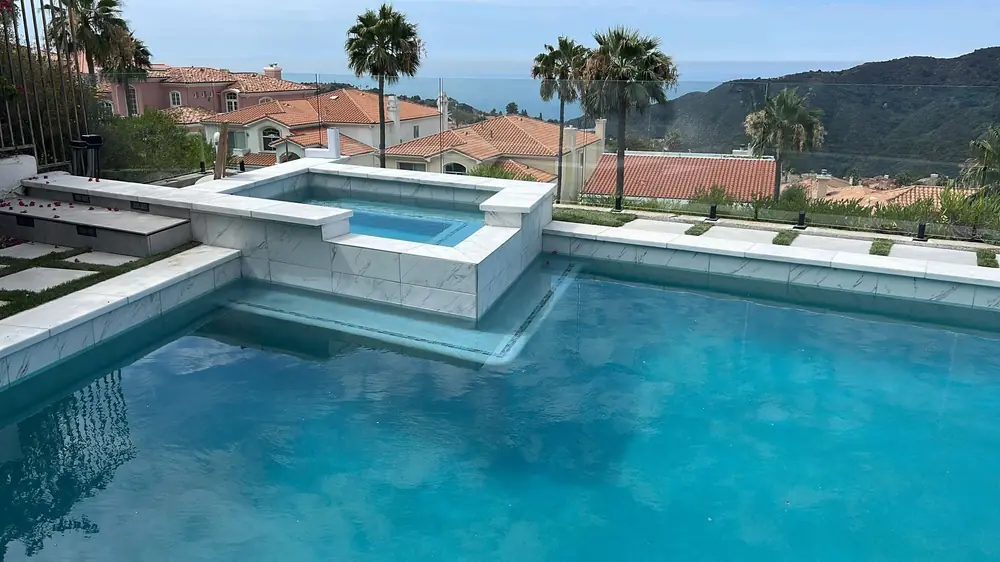
A few real numbers from our experience:
- Crane rental: $1,500 to $3,000 per day, plus the crew to operate it.
- Caissons (deep concrete supports used to stabilize a pool on a hillside): $20,000 or more each.
- Hillside plus poor access: a project priced at $100,000 on flat, level ground could easily double or triple on a hillside with tough access.
If your lot isn’t flat with easy access, expect your bids to reflect it, and expect them to differ more from each other, since every contractor prices site risk differently.
Upgrades: what published guides say
Equipment and finish prices vary by brand and availability. That’s why there’s no single price list that’s right for every project. Your best bet is to check consumer pricing guides, ask about specific brands and models, and make sure every bid lists each upgrade with its own price.
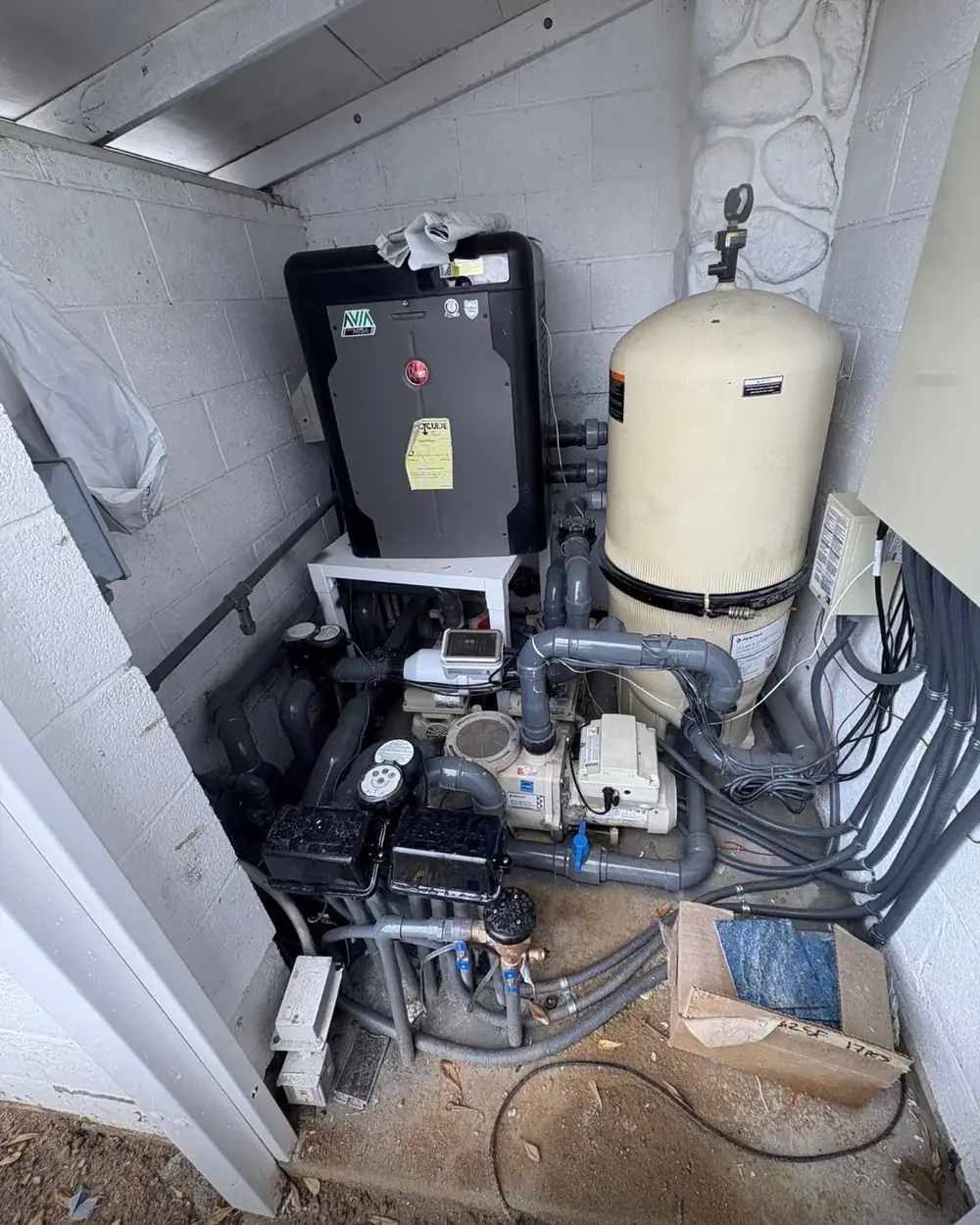
As a starting point, here’s what national guides report:
| Upgrade | Published range |
|---|---|
| Pool heater, installed | $1,830 – $4,217 typical; gas $1,500 – $6,000, heat pump $2,500 – $7,500 3 |
| Salt water system | $500 – $2,500 4 |
| Water feature | $450 – $1,900 2 |
| Spa / hot tub | $2,000 – $35,000 2 |
| Decking, per sq ft | Plain concrete $4 – $8, pavers $6 – $8, stamped concrete $15 – $30, natural stone $10 – $40 5 |
National ranges. Southern California prices often run higher.
About that spa range. It’s wide for a reason. What a spa costs depends on its size first, then whether it’s raised or flush with the pool, the finish materials, the surrounding hardscape, and whether a heater is already in place. Adding a spa to an existing pool is especially challenging work. Nobody can give you a real number without seeing the site.
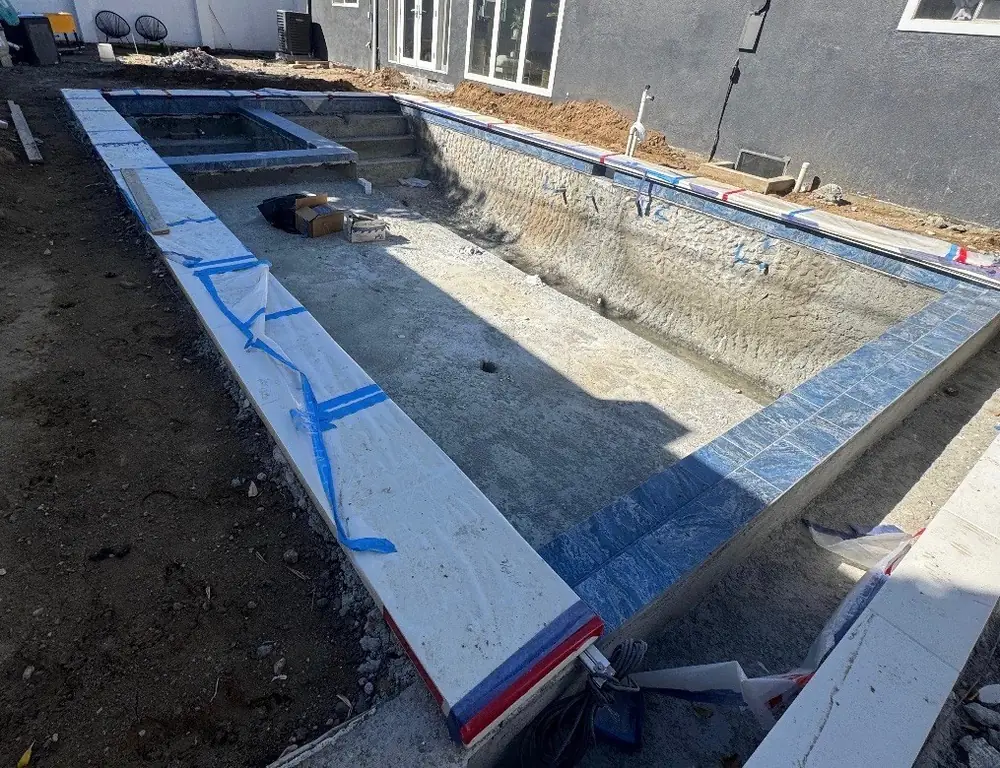
What’s usually not in the price
Contractors include and exclude different things, and there’s often no rhyme or reason to it. Some include equipment and some don’t. Some include basic coping with upgrade pricing and some don’t. That’s why bids for the same pool can be so hard to compare.
But the number one thing missing from pool bids, in our experience, is the enclosure.
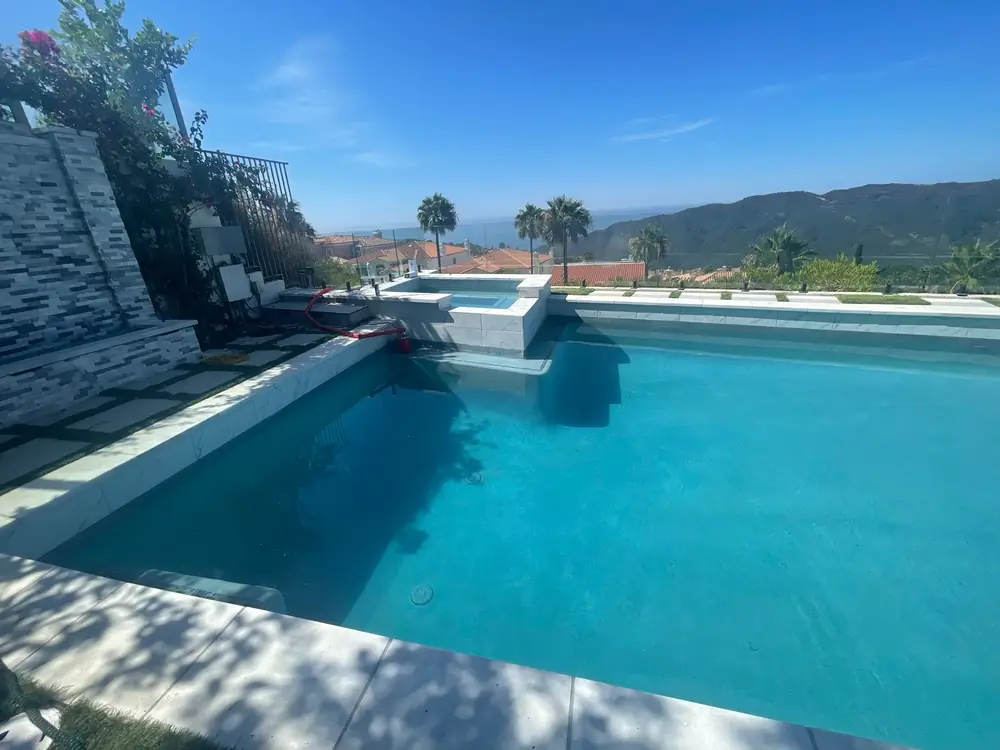
California requires new pools at single-family homes to have at least two of seven drowning-prevention features, and the city checks them before the pool is approved. 6 A pool builder builds pools. They usually aren’t responsible for the fence, gates, alarms, or automatic cover needed to pass that inspection. If your home doesn’t already meet the requirement, it’s an added cost, and it often shows up late in the project.
From our backyard renovation cost guide: mesh safety fencing and gates typically run $2,500 to $5,000, glass fencing $15,000 to $20,000 and up, and an automatic safety cover around $40,000.
Why pool prices keep going up
Prices rise year over year. Supply chain issues and tariffs directly affect the cost of materials. But so does the cost of living.
Southern California is an expensive place to live, and despite the price tag on a new pool, the tradespeople who build them typically aren’t wealthy. With everything from gas to groceries going up, many skilled tradespeople won’t take a job unless the pay is worth their time. Pricing tracks the cost of living and demand.
How to compare pool bids
A price range tells you whether a bid is in the right neighborhood. It can’t tell you whether two bids describe the same pool. Before you sign, check every bid for:
- The same size, depth, and shape
- Basic or upgraded finishes, named by type
- Equipment listed by brand and model, or clearly excluded
- Permits and plans, included or separate
- Site work: excavation, haul-off, access, and anything hillside-related
- The enclosure: who’s responsible, and what it costs
Our Southern California pool bid checklist walks through every line, and our guide to how long it takes to build a pool covers what happens after you sign.
Frequently asked questions
How much does a pool cost in Southern California?
In our experience, an established, full-service contractor typically charges $86,000 to $95,000 for a standard 15′ x 30′ pool and spa with basic finishes. Upgrades can push that past $125,000, and a new pool for less than $78,000 is rare.
What’s the cheapest you can build a pool for in Southern California?
In our experience, around $78,000 is the floor for a new in-ground pool from a licensed contractor, and that gets you the most basic build possible.
Is a small pool much cheaper than a large one?
Not as much as people expect. A small pool still needs every trade a large one does, so the savings is mostly material. Going from a 15′ x 30′ pool to a 10′ x 12′ plunge pool might save around $10,000.
Do pool prices differ between Los Angeles, Orange County, and San Diego?
Not much by county. Permit fees vary by a few thousand dollars. Site conditions like slope, access, and soil, plus how far crews have to travel, matter much more.
How much do pool permits cost in Southern California?
In our experience, $4,500 to $6,000 for plans and permits on a new pool, including the contractor’s planning fee and city fees and taxes.
What do pool bids usually leave out?
Most often the enclosure: the fencing, gates, alarms, or automatic cover needed to pass California’s drowning-prevention inspection. Equipment and coping upgrades are also included by some contractors and left out by others.